Have you ever heard of the ‘Méthode Provençale’?
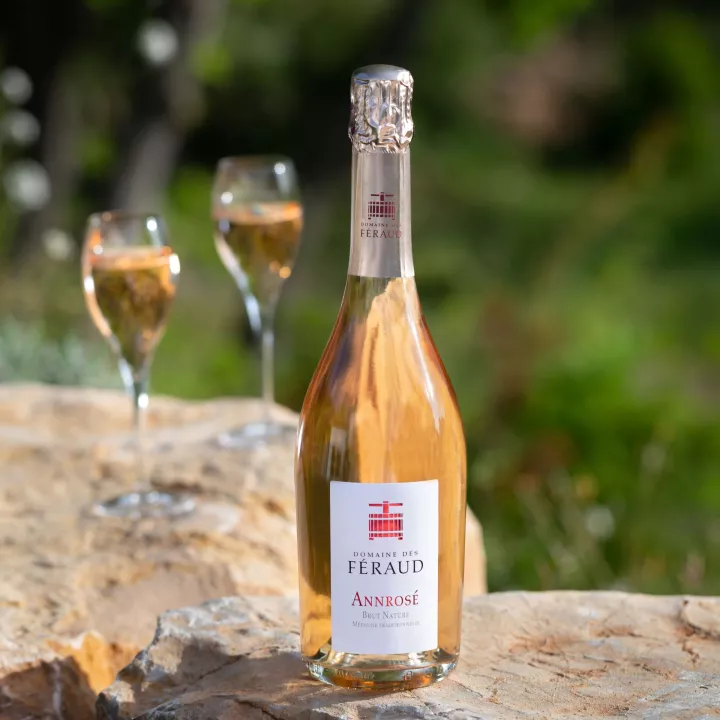
All about our sparkler
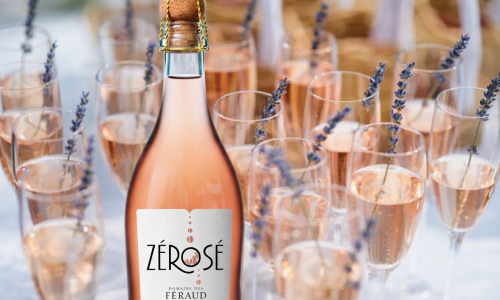
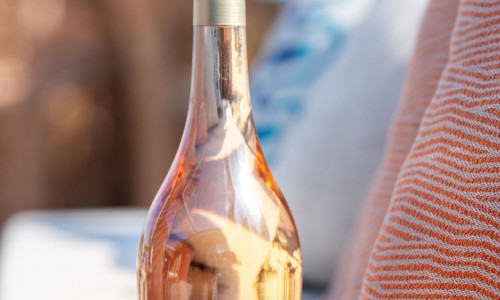
Our sparkling wine is called Annrosé, inspired by Annerose, the ‘lady of the house’. It is made from our finest rosé wines and – just like in Champagne – using the ‘Méthode traditionnelle’ or bottle fermentation.
Two things make our Annrosé special: the Méthode Provençale and the ‘zero dosage’.
The bottle fermentation, was developed in France in the 17th century. Essentially, it involves a second fermentation to produce carbon dioxide in the final bottle. Originally, this process was known as the Méthode Champenoise. Since 1994, this designation of origin has been protected by trademark law for sparkling wines from Champagne.
Here are the five steps of bottle fermentation, which takes a total of 18 months for our Annrosé:
1. The cuvée
After the grapes have undergone their first fermentation, a cuvée is ‘assembled’ from different grapes. Annrosé is a cuvée made from Cinsault, Cabernet Franc and Rolle, with all the grapes coming from a single vintage.
Unlike in classic bottle fermentation, with the Méthode Provençale we draw off part of the cuvée’s must at this stage and store it in deep freeze.
2. The tirage
After the cuvée has been stored cold for several weeks to clarify it is bottled in the final “Champagne bottle” (tirage). To enable the second fermentation, a “liqueur de tirage” made from cane sugar and yeast is added to the wine before the final bottle is closed with a crown cap. Due to the added sugar, sparkling wines generally have a higher alcohol content than the corresponding still wine. With the Méthode Provençale, no sugar is used for the second fermentation in the bottle; instead, the base wine’s must – which has been deep-frozen until the tirage – is used. As a result, our Annrosé retains the alcohol content of the still wine, whilst at the same time we avoid potential headaches caused by the addition of a ‘liqueur’.
3. Maturation
The bottles are stored horizontally on slatted racks or in wire mesh boxes. As a result of the second fermentation and the formation of carbon dioxide, the wine becomes cloudy and develops a sediment of dead yeast. The pressure inside the bottle rises to between 5 and 6 bar. In France, the minimum requirement for the ageing period for bottle fermentation is 9 months.
4. Riddling
Traditionally, the bottles were placed in riddling racks with their necks angled downwards and were regularly rotated and shaken by “rémueurs”, gradually being raised to an upright position so that the yeast deposits collected behind the cork. Today, the work of the rémueurs is largely carried out by automatic riddling machines that move entire wire-mesh crates.
5. The dosage
At the end of the process, during ‘dégorgement’, the neck of the bottle is frozen and opened. The pressure inside the bottle forces the frozen yeast plug out. A certain amount of wine is lost in the process. Before the champagne cork is fitted to the bottle, the bottle is topped up with a mixture of cane sugar and wine. It is this ‘liqueur de dosage’ or ‘liqueur d’expédition’ that determines the level of sweetness (the ‘dosage’) and the character of the sparkling wine. The designations ‘Demi-Sec’ correspond to a residual sugar content after dosage of 32–50 g/l, ‘Dry’/‘dry’ to 17–32 g/l, ‘Brut’ to up to 12 g/l, and ‘Extra Brut’ to up to 6 g/l.
Annrosé is a Brut Nature with a residual sugar content of less than 1 g/l. As with the ‘tirage’, we do not add any sugar whatsoever after the ‘dégorgement’ (zero dosage), only a splash of Blanc de Rolle. This ensures that Annrosé remains natural and readily digestible.