The wine kork
Few things are as controversial as …
…in the world of wine, and there is hardly a better time than bottling to discuss it. History does not clearly state whether it was Dom Pérignon, the cellar master, who was the first to place a cork on a bottle of wine, or whether it was the English who began sealing the first glass bottles with glass stoppers.
Today, critics view the cork as a symbol of Old World wine culture and an unnecessary source of risk for wine faults such as cork taint and oxidation. Proponents of the cork, on the other hand, appreciate the cultural aspect of opening the bottle with its famous ‘pop’ and the sustainability of the raw material.
We love cork, and particularly the innovative variants from DIAM that we use today. Why?
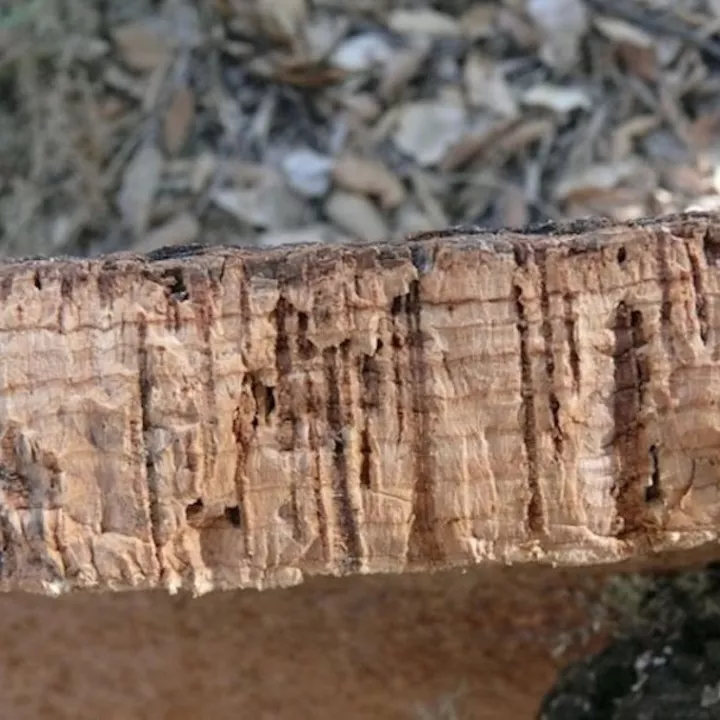
The bark of the cork oak consists of dead cells and, thanks to the transformation of fatty acids and the accumulation of waxes, it is a true miracle material: strong, elastic, lightweight, water-repellent and virtually rot-proof. Perfect as an insulating material, it is even better as a wine cork. Indeed, unlike glass stoppers, which must be treated with gel and oil – a tedious process and one of dubious taste – a cork can simply be pressed into the neck of the bottle. Furthermore, a bottle of wine with a cork can still ‘breathe’, as gas exchange is possible between the cork’s cells.
Even though advocates and lobbyists for screw caps (made of aluminium and a plastic seal) constantly highlight the improved environmental footprint thanks to the recycling of aluminium as a raw material: cork is an almost perfect renewable raw material, and numerous reputable studies confirm that the natural cork stopper is clearly the better choice from an environmental perspective. Cork oaks live for between 250 and 350 years; they are a model of resilience, as cork is virtually non-flammable, and they store more CO₂ than any other tree over the course of their lives, thanks to their increased growth following harvesting. When a cork oak is between 25 and 40 years old, it is harvested for the first time, and then every 9 to 12 years. Furthermore, cork forests provide a habitat for wildlife, and the fruits (acorns) serve as an important winter food source, for example for the famous Iberian pigs.
Twenty years ago, the French company DIAM revolutionised the cork industry. Thanks to a new processing technology, the company succeeded for the first time in cleaning ground cork without solvents or chemicals, thereby removing all traces of trichloroanisole (TCA) – a by-product of fungal cultures responsible for ‘cork taint’. DIAM corks are therefore considered to be organoleptically neutral. Furthermore, DIAM has developed a manufacturing process that also makes it possible to determine the oxygen transfer rate of each individual cork. This process allows the oxygen flux through the cork to be selected according to the desired profile of a wine, depending on whether it is to be drunk within six months or after 30 years, and whether it is red, rosé or white. Thanks to the combination of a natural material, artisanal expertise and technological innovation, DIAM corks are now regarded as ‘state of the art’.
And don’t forget: as part of our commitment to constantly optimising the carbon footprint of our wines, we’re taking part in a cork recycling initiative for a good cause (cancer research). You can get involved too: collect corks and send us a full Féraud box. As a reward for your efforts (and to cover the postage costs), we’ll send you a bottle of one of our finest wines.